Easy Draw, Anyone Can Draw
- 4.4
- Rating
- 1.00M
- Installs
- Free
- Price
 Analysis by App-foxy
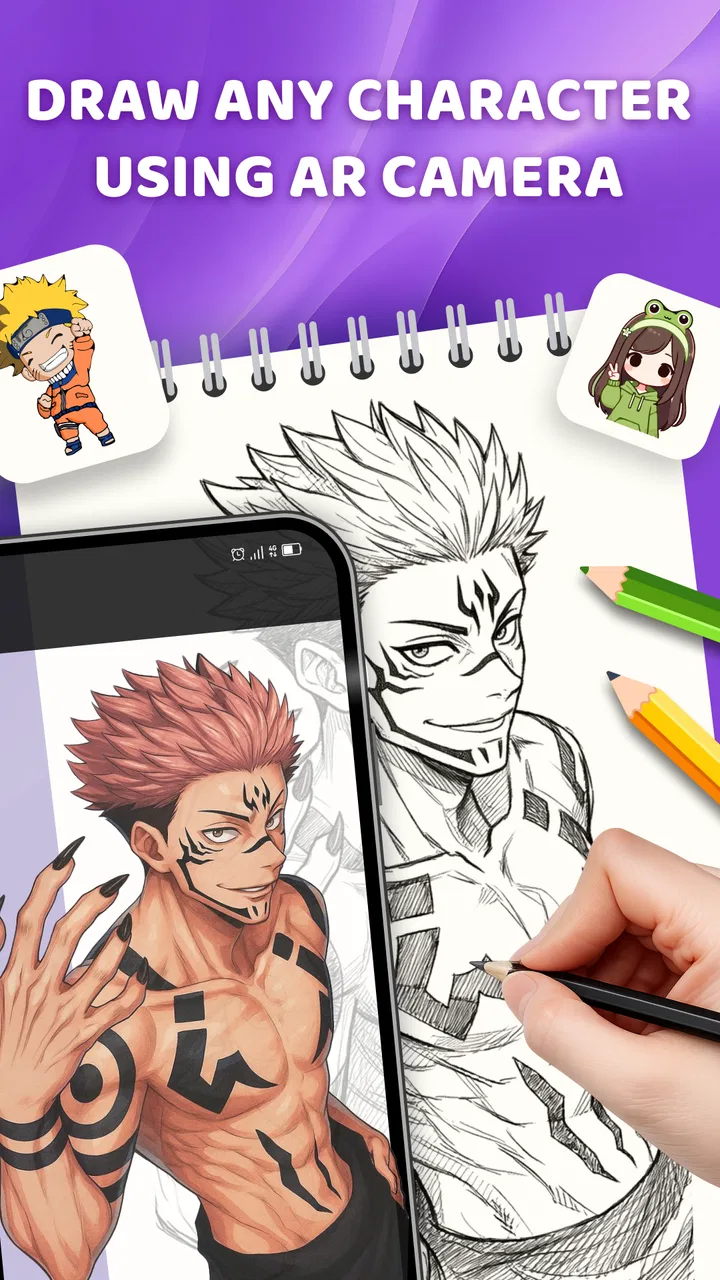
I tried Easy Draw - AR Camera Sketch as the sort of tool you might keep on a shared household phone or tablet, where one person wants to sketch a birthday card, another wants to copy a simple object, and nobody wants to spend an evening learning a complicated drawing program. Its basic idea is direct: the camera shows a reference image over paper through augmented reality, giving you a guide to follow with a pencil. In my experience, that makes the first few minutes much less intimidating than starting with a blank page.
What makes it appealing is not that it turns someone into an artist instantly. It gives beginners a visual scaffold. You still have to control your hand, choose suitable paper, keep the device positioned sensibly, and decide how much detail to include. The result depends on those practical choices, but the app lowers the hardest early barrier: knowing where to begin.
Easy Draw - AR Camera Sketch is a free art and design app from Smart Technology Global. It is suitable for Everyone, runs on Android 7.0 or later, and the current version is 1.2.7. It has reached over a million installs and holds a 4.6 average from around 7,500 ratings, which suggests that the simple tracing concept has found a sizeable audience.
You May Also Like

 Blood Strike: 2.5 Anniversary
Blood Strike’s Loadouts Turn Every Drop Into a Tactical Gamble
A close look at Blood Strike’s custom loadouts: how fast access to signature weapons reshapes its battle royale rhythm, rewards preparation, and narrows the gap between fights.

 Pandora - Music & Podcasts
Pandora’s Music Is Easy to Start, but Harder to Recover
Pandora’s strength is its low-effort path from a seed to a station. Its weak spot is how much confidence it asks you to place in connection, setup, and quiet recovery.

 8 Ball Pool
 Is Built on Rivalries, Rematches, and Routine
A close look at the rivalries, rematches, shared routines, and unanswered safety questions that turn a quick pool match into a persistent mobile community.

 Samsung Music
’s Quiet Strength Is Playing What You Already Own
Its reach comes less from spectacle than from dependable access to a personal library. That simplicity is both the app’s strongest retention engine and its ceiling.

 AccuWeather: Weather Radar
AccuWeather Review: A Quick, Clear Forecast for Everyday Decisions
For everyday plans, the best forecast is the one you can understand quickly. AccuWeather makes rain timing, radar, and local conditions easy to act on, with a few trade-offs.

 Hill Climb Racing
Why Hill Climb Racing Still Turns Crashes Into One More Run
A tiny car, a bumpy hill and one more upgrade: Hill Climb Racing keeps resurfacing because its simple chaos makes every near-miss feel personal.
More From Our News Desk



How it fits into a shared household
The most natural household use is a short, informal drawing session. Imagine a child asking an adult to help make a card, while the adult wants to draw a recognizable animal rather than an abstract shape. One person can choose the reference and prepare the paper, then the other can take over the pencil. The phone becomes a temporary drawing guide rather than a personal creative workspace.
I like this arrangement because it encourages cooperation without requiring everyone to understand the app equally well. A parent, older sibling, or friend can handle the camera position while the beginner concentrates on the lines. Later, the roles can switch. That small division of tasks is useful because keeping the screen steady and drawing accurately at the same time can be awkward for a first-time user.
It also works for practical projects around the home. You might use it to sketch a label illustration, make a quick decoration, copy a simple plant or household object, or prepare a handmade note. The tracing layer is especially helpful when the goal is a recognizable result rather than free experimentation. For a shared device, that makes the app easier to understand than a full drawing suite filled with brushes, panels, and settings.
There is a trade-off, though. A shared phone is not automatically a good drawing stand. If the device is held by one person, the image can shift while another person draws. I found that the experience becomes much more comfortable when the phone is placed in a stable position above or beside the paper. A simple stand, a stack of books, or another safe support can make more difference than repeatedly correcting the image by hand.
The important household insight is that stability matters more than artistic ambition. Start with a small, uncomplicated reference and a clear sheet of paper. If the first attempt is overloaded with tiny details, the shared session can quickly become a struggle over the phone rather than an enjoyable drawing activity.
Preparing the paper and the workspace
Before opening the camera view, I would clear a reasonably bright, flat area. Strong shadows from hands or furniture can make the projected reference harder to follow, while glare on the screen can force the person drawing to lean or move the device. A darker pencil or pen also gives the finished lines more confidence than a very faint mark.
The paper should be positioned so the complete drawing area remains visible. Starting too close to an edge creates a frustrating choice: either crop the reference or move everything halfway through. I prefer leaving a margin around the intended picture, especially when the app is being used by a child who may draw beyond the first outline.
For a household session, it helps to agree on the image before beginning. The person holding the device can look for a reference that matches the available paper and the artist’s patience. This is a better workflow than changing the subject after several lines have already been drawn. Since the app’s strength is guidance, not unlimited editing, a little preparation prevents avoidable restarts.
What the camera-guided approach feels like
The augmented-reality method creates an unusual split in attention. I look at the screen to see the guide, but my pencil touches the real paper below it. That is immediately more approachable than trying to recreate an image from memory, yet it also means the screen and hand need to remain aligned. Beginners may instinctively watch the pencil instead of the display, then lose track of the projected outline.
My practical advice is to draw in sections. I would begin with the largest outer shapes, pause to check the overall position, and only then add smaller features. This avoids the common mistake of perfecting one eye, leaf, or corner before discovering that the entire subject is drifting off the page. The app can guide placement, but it cannot judge proportion for you once the drawing moves away from the reference.
Another useful habit is to lift the pencil regularly. Continuous tracing feels fast, but short strokes make it easier to correct a line without damaging the rest of the picture. This is particularly valuable when several people are taking turns, because each person may apply a slightly different amount of pressure or use a different drawing style.
Setup boundaries and coordination on one device
Easy Draw - AR Camera Sketch is simple enough for a casual start, but shared-device use still benefits from clear boundaries. I would decide who selects the image, who holds or positions the phone, and who draws before the session begins. Without that agreement, the person with the device can unintentionally control the whole activity while the person with the pencil waits for adjustments.
Because the app relies on the camera view, the phone’s position is part of the drawing setup. Moving it to answer a message, hand it to someone else, or show another person the screen can change the alignment. For that reason, I would treat the device as temporarily occupied. If the household expects an important call or needs the phone for another task, this is not the best moment to begin a detailed drawing.
I also recommend separating the setup phase from the drawing phase. First choose the paper, lighting, subject, and viewing angle. Then invite the artist to start. This two-stage routine is more efficient than making adjustments while a child is already tracing. It also gives the person holding the phone a chance to explain that the projected image is a guide, not a line that will physically appear on the paper.
For younger users, an adult should handle the positioning of the device and any changes to the reference. That is not because the drawing itself is difficult, but because a child may move the phone closer to inspect a detail and accidentally lose the composition. A short explanation such as “keep the camera here while you draw” establishes a useful boundary without making the activity feel restricted.
There is no need to turn the session into a formal lesson. I found that a few clear instructions work better: keep the page still, draw slowly, and ask before moving the phone. Those rules protect the alignment while leaving the creative decisions to the person drawing.
Sharing the creative work without confusion
In a household, several people may want to use the same app but have different expectations. One person may want a faithful outline, another may prefer to use the guide loosely, and a third may simply want to experiment. It helps to define the purpose of each session. If the goal is a finished card, precision matters more. If the goal is practice, imperfect lines are part of the point.
I would also avoid treating the app’s guide as the owner of the drawing. The person using the pencil should feel free to simplify, exaggerate, or change details. Tracing can be a starting framework, not a rule that every line must be copied. This is where the app is more useful than a rigid worksheet: it gives a visible structure while still allowing the final result to become personal.
For a group, a rotation system works well. One person chooses the subject, another keeps the device steady, and another draws. After one small section or one complete attempt, the roles change. This prevents the most confident user from taking over and gives beginners a controlled chance to learn how the camera view behaves.
A realistic example would be a rainy afternoon when a family wants a quiet activity without setting up a full craft table. An adult chooses a simple object, a child traces the broad shape, and a second child adds color after the outline is complete. The app handles the initial visual guidance, while the household supplies the conversation and finishing touches. That is where I think it works best: as a shared starting point, not as the entire creative experience.
Age, trust, and sensible supervision
The Everyone content rating makes the app approachable for a broad household audience. Its concept is easy to explain, and the drawing task can be adjusted to different abilities by choosing simpler or more detailed subjects. A beginner does not need prior knowledge of layers, brushes, paths, or digital illustration terminology to understand what the camera guide is doing.
Even so, age suitability is not the same as independence in every situation. A young child may need help positioning the phone, selecting an appropriate reference, and understanding why the image moves when the device moves. An older child or adult will probably manage those steps alone, but the first session is still worth observing so the household can establish a comfortable routine.
Trust also matters when a shared device is involved. I would let the person using the app choose the drawing, but I would keep control of the phone’s general handling and make sure it is placed somewhere safe. The app is being used for art, yet the camera and device remain part of the setup. A stable surface and careful handling are sensible precautions, especially when pencils, cups, or other objects are nearby.
For families, the strongest benefit is confidence. A child who normally says “I can’t draw” may be willing to try when the first outline is visible. The adult should resist correcting every movement, though. If the guide becomes an excuse to supervise every line, the activity loses its creative value. I would praise decisions and persistence rather than demanding an exact copy.
On the other hand, people who already draw digitally may find the experience limited. If you want sophisticated brush control, editable layers, vector precision, color management, or a polished illustration workflow, a conventional drawing application is the better choice. Easy Draw is designed around physical paper and camera guidance, so it should not be judged as a replacement for a complete digital art studio.
Where it beats ordinary alternatives
Compared with copying an image from a second screen, the camera-guided approach keeps the reference and paper connected in one view. You do not have to keep looking from the page to a separate picture and estimate the scale by eye. That makes it especially friendly for someone who struggles with proportion or has never used a drawing tutorial.
Compared with a printed tracing sheet, the app is more flexible because the reference can be changed without preparing a new page. The paper remains your own, and the finished drawing can be colored, decorated, or combined with handwriting. A printed sheet may be more stable and simpler for very young children, but it does not offer the same quick change of subject.
Compared with a full digital art app, this one has a lower learning curve and a more tangible result. You are making marks on real paper rather than learning a screen-based tool. That is a meaningful advantage for families who want an offline craft outcome. The cost is precision and convenience: digital tools usually make undoing, resizing, and revising much easier.
The app is also not the right option for someone seeking structured drawing instruction. It can show where lines go, but it does not replace lessons about anatomy, perspective, shading, or visual observation. If your goal is to develop independent drawing skills, use the tracing stage as practice and gradually redraw the subject without the guide. Otherwise, it is easy to become dependent on having an outline visible.
Small techniques that improve the result
One technique I found valuable is to finish the broad contour before adding internal detail. This gives the drawing a chance to reveal alignment problems early, when they are still manageable. It also makes the session feel successful sooner, which matters when the app is being used with children or during a short break.
A second technique is to use the guide lightly rather than pressing hard on the paper. Light construction lines can be refined or erased later, while heavy marks can make the final piece look crowded. If the household plans to color the image, keeping the first pass clean leaves more room for that later stage.
A third is to choose references with clear silhouettes for the first attempt. Objects with a strong outer shape are easier to coordinate with the camera view than subjects filled with overlapping textures. Once the user understands the basic movement of the guide, more detailed images become less frustrating.
I would also save the creative decisions for the paper. The app’s value is in helping with placement, but the final character comes from line weight, color, added patterns, captions, and intentional changes. That balance prevents the result from looking like a mechanical copy and gives each household member a reason to use the same reference differently.
My household verdict
Easy Draw - AR Camera Sketch is a convincing choice for families, roommates, or friends who want a low-pressure way to begin drawing together. The free price removes the need to commit before trying it, and the Everyone rating makes it comfortable to consider for a mixed-age household. Smart Technology Global has kept the central idea focused: use the camera view to make paper drawing feel more accessible.
I would recommend it to beginners, parents looking for a simple shared activity, and anyone who wants to create handmade cards or decorations without first mastering a digital art program. It is particularly good when one person can help stabilize the device and another can concentrate on the pencil work.
I would skip it if you need a serious illustration workspace, advanced editing, or a lesson-based path toward independent drawing. It also becomes less appealing when the phone cannot remain stable or when the household needs the device constantly for other tasks. Those are practical limitations, not flaws in the core idea.
Overall, I see it as a bridge between looking at a picture and making something with your own hands. Used patiently, it can turn a blank sheet into a manageable project and give a shared device a genuinely collaborative purpose. My recommendation is to start with one simple subject, one stable setup, and one short session; that is where this app delivers its clearest value.
The app was released on December 25, 2025, and its current version remains 1.2.7 for compatible Android devices. With its free access and straightforward camera-based approach, it is worth trying when the household wants an easy creative activity rather than a demanding art course.
FAQs for Easy Draw, Anyone Can Draw
01What is Easy Draw - AR Camera Sketch and how does it work?
Easy Draw - AR Camera Sketch is an innovative app that allows users to create sketches and drawings using augmented reality technology. By utilizing your device's camera, the app overlays a virtual canvas onto real-world surfaces, providing a unique and interactive drawing experience. It's perfect for artists looking to explore AR creativity.
02Is Easy Draw - AR Camera Sketch suitable for beginners?
Yes, Easy Draw - AR Camera Sketch is designed for users of all skill levels. It features an intuitive interface with easy-to-use tools, making it accessible for beginners. Tutorials and guides are available to help new users get started, while advanced tools cater to more experienced artists.
03What devices are compatible with Easy Draw - AR Camera Sketch?
The app is available for both Android and iOS devices. However, to fully utilize its AR capabilities, your device should support augmented reality features. This typically requires a newer model smartphone or tablet with an AR-capable camera, ensuring smooth performance and optimal user experience.
04Does Easy Draw - AR Camera Sketch require an internet connection?
No, Easy Draw - AR Camera Sketch does not require an internet connection for its core functionalities. You can create and save your sketches offline. However, an internet connection is needed for downloading additional content, accessing tutorials, and sharing your creations online.
05Are there any in-app purchases or subscriptions in Easy Draw - AR Camera Sketch?
Easy Draw - AR Camera Sketch offers a range of features for free, but it also includes optional in-app purchases. These may include additional brushes, textures, or premium features to enhance your drawing experience. A subscription model may be available for users seeking access to exclusive content and regular updates.
Pros
- Intuitive interface for beginners
- Real-time AR sketching features
- Supports various drawing tools
- Offers creative customization options
- Lightweight and fast performance
Cons
- Limited advanced editing tools
- Occasional AR tracking issues
- Ads can be intrusive at times
- Requires stable lighting for best results
- Limited export formats for sketches

Easy Draw, Anyone Can Draw
Gallery